

Digital Product Passport (DPP): Terms and Requirements for Businesses
The Digital Product Passport (DPP) is a system being developed under the EU Ecodesign Regulation that is changing the rules governing product data, sustainability, and traceability. The DPP requires that all information regarding a product’s composition, origin, and recycling be digitally accessible throughout the entire value chain.
UAB “VYGĖJA” helps Lithuanian companies establish a well-organized data foundation and align physical labeling with the requirements of the Digital Product Passport—without the need for rushed and costly last-minute projects.

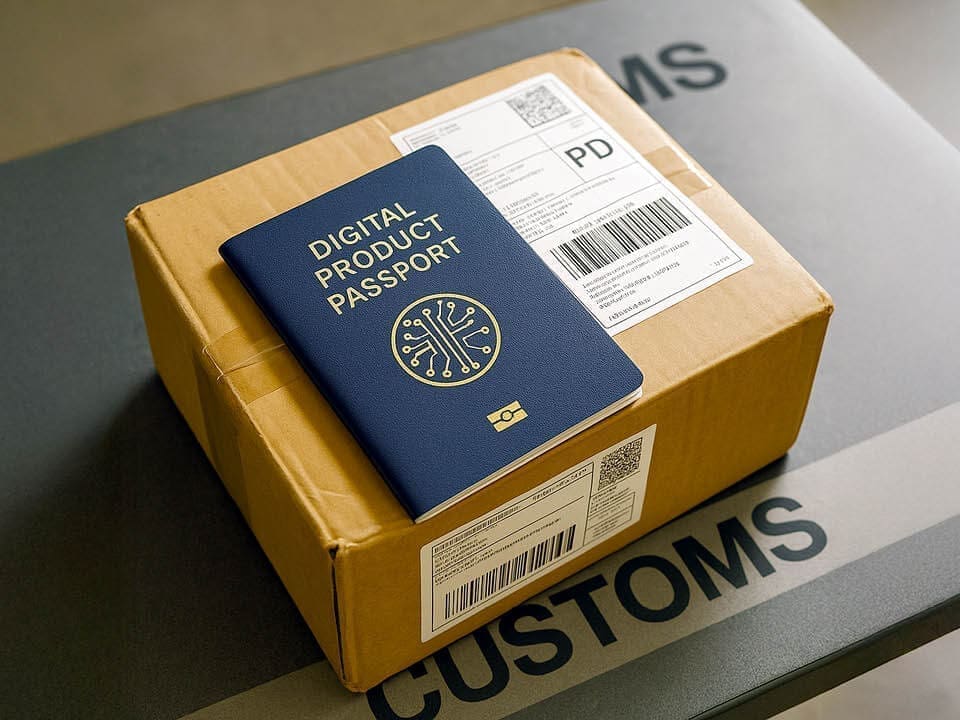
What is the DPP, and when will it become mandatory?
The DPP replaces the previous model, in which information was scattered across PDF files, labels, supplier declarations, and internal Excel spreadsheets. It is a unified digital record accessible to users, partners, and institutions.
Implementation Schedule (Starting in 2027)
The DPP is being implemented in phases. The first clearly defined category consists of certain batteries, for which a passport will become mandatory as of February 18, 2027. Other product groups will be included gradually in accordance with individual EU roadmaps.
What information is included in the passport?
Depending on the sector, the DPP stores data on material composition, components, technical parameters, recycling options, instructions for use, and certificates of conformity.
Transparency and Market Oversight
The passport serves as a digital data source that allows for instant verification of a product’s origin and compliance with environmental standards, and simplifies the movement of goods through customs.
What will happen if a company fails to comply with the DPP requirements?
Failing to comply with mandatory digital passport requirements poses risks not only on a technical level but also on a financial level. Uncontrolled data directly impacts revenue and reputation.
Restrictions on Access to the EU Market: Products without a valid DPP may be blocked at the border and at customs checkpoints.
Sanctions and fines: Regulatory authorities will impose financial penalties, market restrictions, and public disclosure of violations.
Supply chain disruption: B2B partners and major retail chains will begin to avoid suppliers who cannot provide transparent digital data.

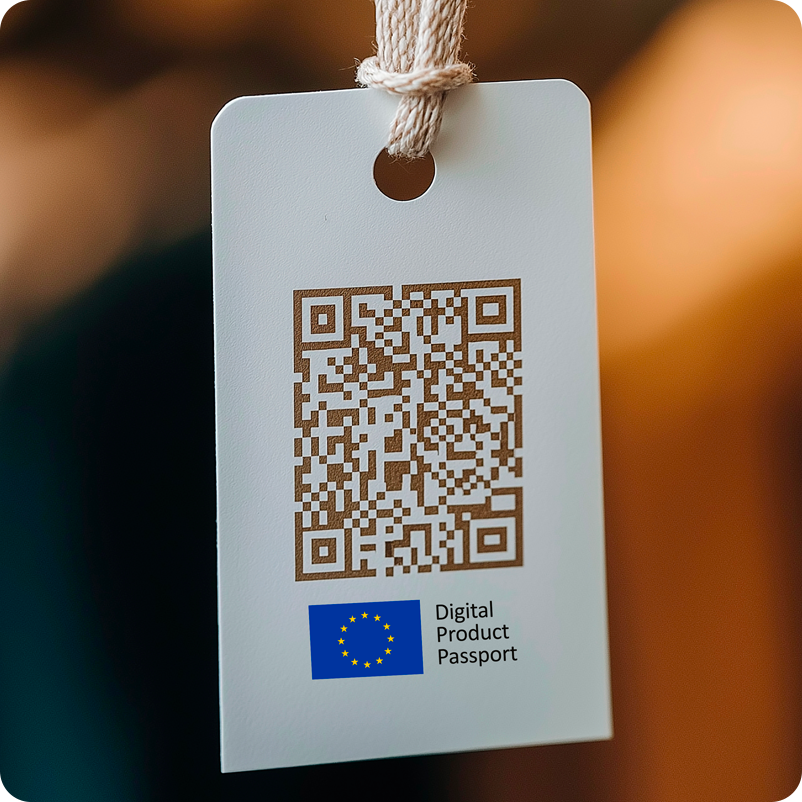
A Practical 3-Step Preparation Guide with UAB “VYGĖJA”
The greatest value is created when the DPP is not separated from the overall product labeling. We help integrate physical labels, RFID/QR codes, and databases into a unified system.
Step 1: Data Audit – We assess what product data you already have (in ERP systems, specifications) and identify which fields are missing to meet future requirements.
Step 2: Structure Standardization – We prepare the information logic and data architecture so that information can be managed in a digital format.
Step 3: Tagging Integration – We integrate packaging tagging solutions (QR codes, barcodes, RFID) with the digital passport database.
FAQ – Digital Product Passport (DPP)
What is a Digital Product Passport (DPP)?
This is a digital record that stores and transmits important information about a product’s composition, durability, recyclability, and compliance with EU requirements. UAB “VYGĖJA” helps organize this data and prepare it for practical use.
When does the DPP take effect?
The DPP is being implemented in phases. The first mandatory requirements for certain product groups (e.g., batteries) will take effect in 2027, and other sectors will be included gradually.
Why is the DPP important for businesses right now?
Because it requires setting up a data management structure in advance. Companies that have done their homework in advance will avoid having their goods held up at the EU border and will have an advantage over their competitors.
Where should you start when preparing for the DPP?
Starting with a product data audit: determine what data has already been collected, where it is stored, and which fields are missing. The team at UAB “VYGĖJA” helps conduct this audit and prepare a clear action plan.